Food Distribution Program on Indian Reservations (FDPIR)
Food Distribution Program on Indian Reservations (FDPIR)
Okta:
Higher Ed Video
FDPIR is a USDA Food and Nutrition Service program that provides nutritious food to income-eligible families on Native American reservations across the country. The program needed a complete suite of outreach materials — but this wasn't a standard federal communications project. The audience is diverse, the context is culturally specific, and the design had to earn trust before it could educate.
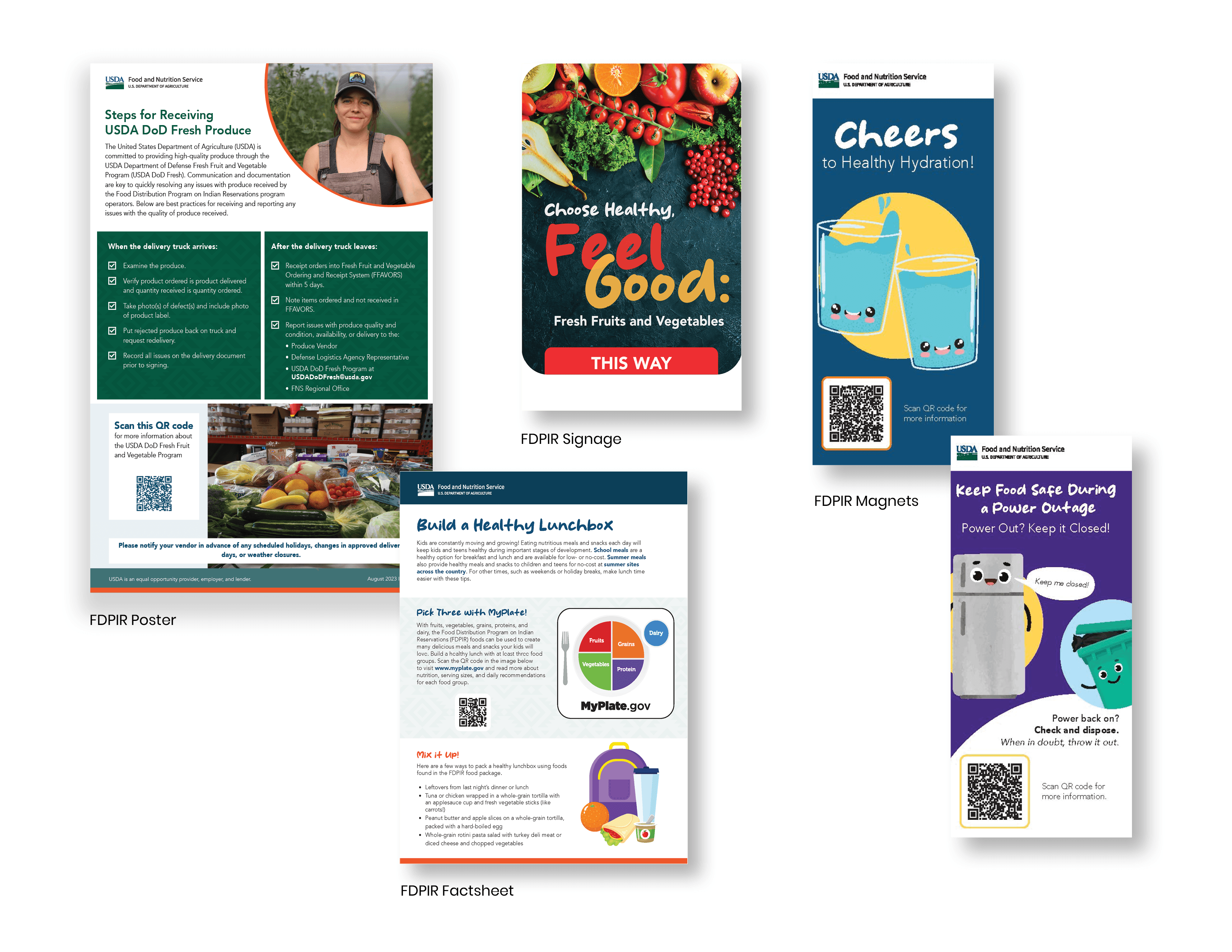
Nutrition education for Native American communities shouldn't look like every other government handout. We designed materials that felt like they belonged to the people they were made for.
CHALLENGE:
Federal nutrition materials tend to follow the same formula: clinical photography, dense text, institutional tone. For FDPIR, that approach wouldn't work. The program serves nearly 650,000 tribal members across 100 tribal organizations — families, elders, children — in communities where trust in federal messaging isn't automatic. The materials needed to feel warm, clear, and culturally respectful while still meeting USDA standards.
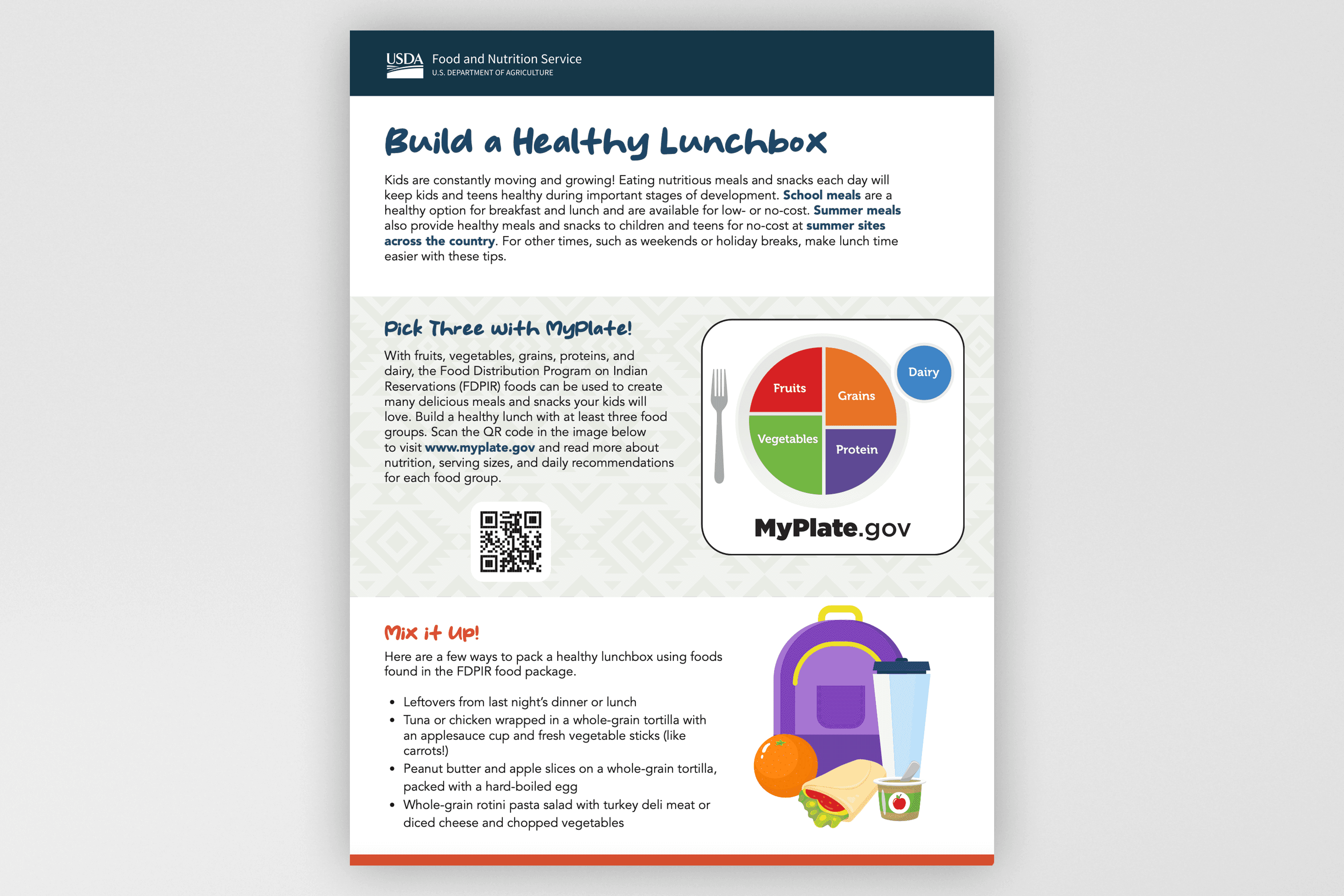
On top of that, the deliverable list was massive: brochures, posters, factsheets, shelf talkers, magnets, stickers, and event signage. Every piece had to be consistent enough to feel like one program and flexible enough for local teams to use across very different communities.
Creative Approach:
1. Discovery and Concept Development. We began by deeply exploring FDPIR’s mission, audiences, and existing materials. Through stakeholder discussions and cultural research, we identified key goals: making healthy food options clear and attractive, supporting nutrition education, and providing local staff with tools that felt trustworthy and easy to use.
I guided our team in developing two primary creative directions:
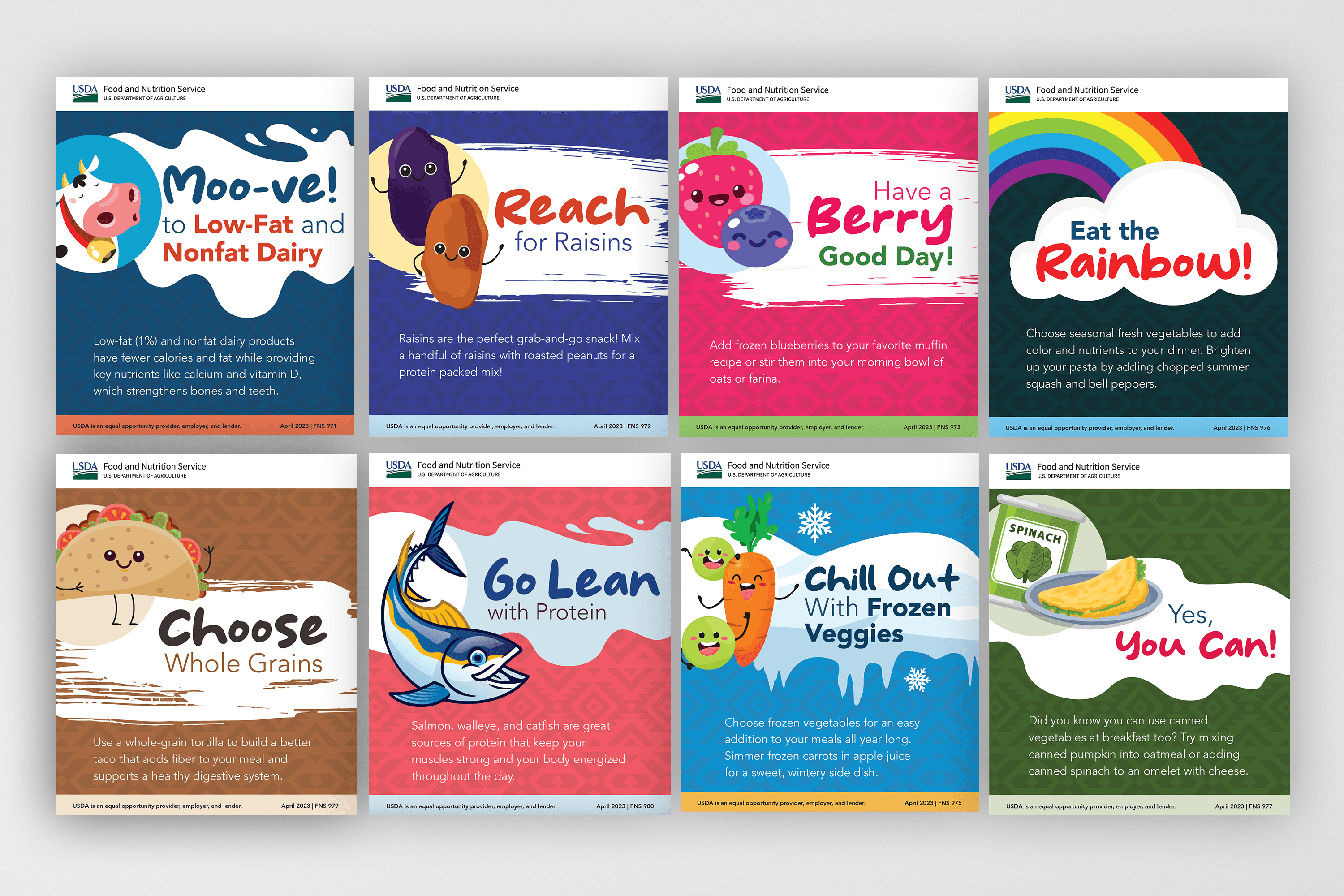
A fun, cartoon-inspired approach with bright colors and character illustrations to appeal to families and children.
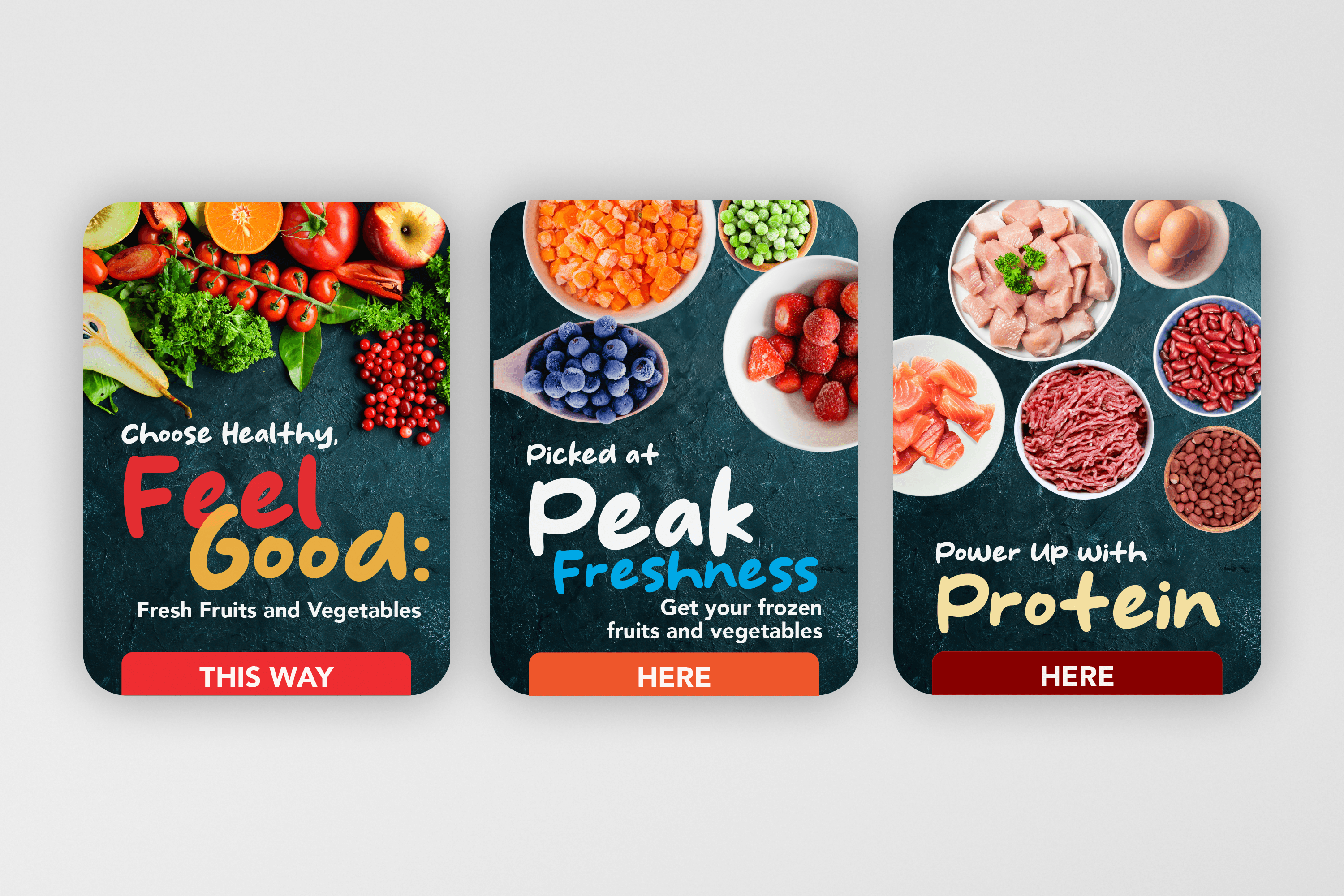
A rich, photography-based style with bold color blocks and playful typography to highlight actual food options and maintain authenticity.
2. Illustrative Design System. For the cartoon-style materials, we created a playful, approachable look featuring familiar food and household items brought to life with personality. Animated fruits, vegetables, and kitchen staples helped break down barriers and make nutrition education more accessible and inviting.
3. Photography-Based Creative. For other pieces, our design approach emphasized high-quality imagery, clear messaging, and colorful layouts to showcase the range and quality of foods offered through the program. While I did not participate in managing the photoshoot itself, I led our design team in applying the resulting photography effectively and cohesively across all materials.
4. Production of Outreach Materials. We designed and delivered a full suite of outreach tools, including:
Trifold brochures
Posters
Factsheets
Shelf talker signage
Magnets
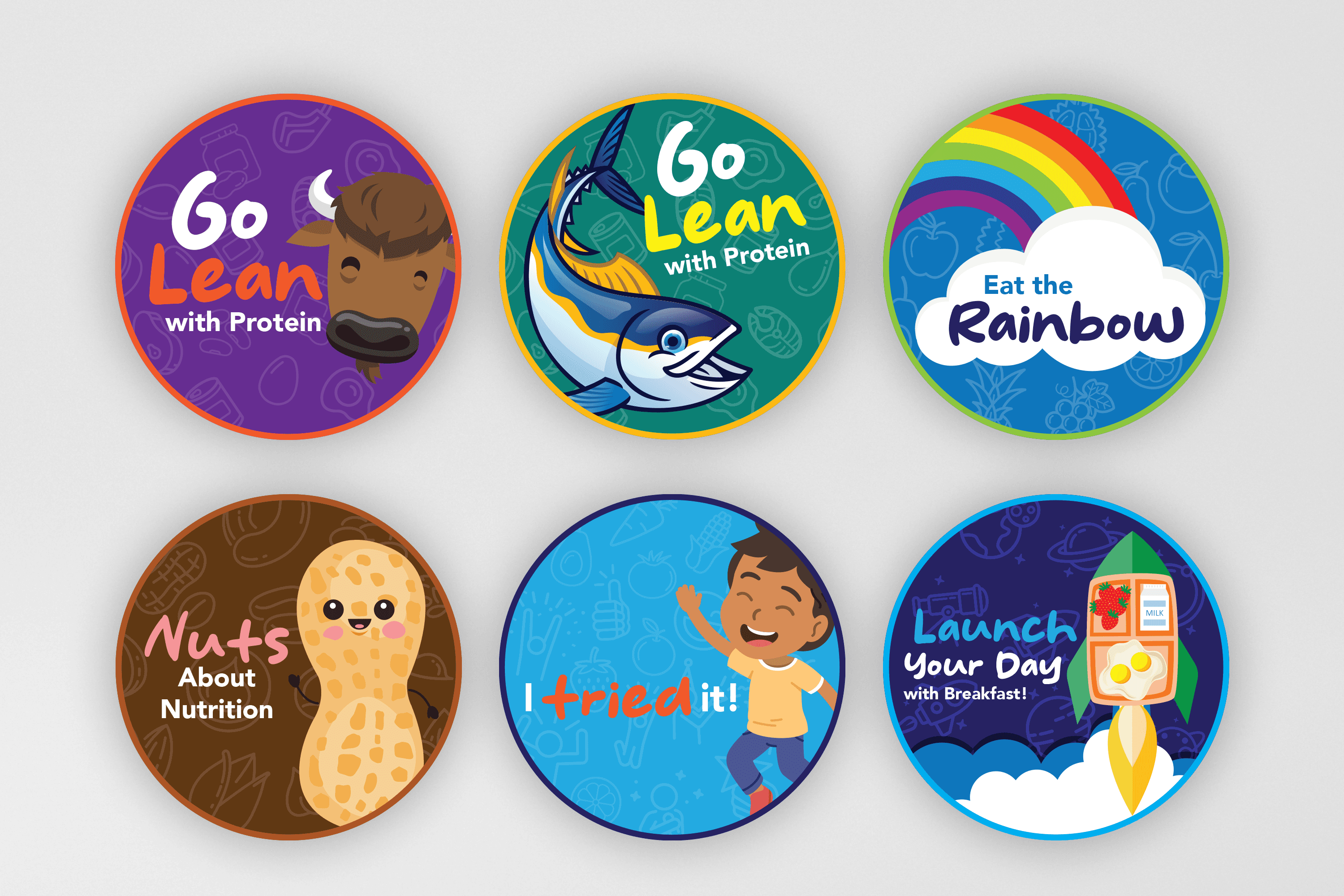
Stickers
Event and program signage
Each piece was carefully designed to be consistent, clear, culturally relevant, and adaptable for local program teams.
Results:
✅ Delivered a large, cohesive suite of outreach materials supporting nutrition education across reservations.
✅ Developed two complementary creative styles (illustrative and photography-based) to meet diverse audience needs.
✅ Created tools that were fun, bright, and inviting, helping local FDPIR staff communicate healthy choices more effectively.
✅ Supported USDA’s mission of delivering nutritious food options in a respectful, culturally aware manner.
APPROACH:
We developed two complementary creative directions, each serving a different purpose within the same system.
The first was illustrative — a bright, character-driven style where fruits, vegetables, and kitchen staples came to life with personality. This direction was designed to reach families and children, making nutrition education feel playful rather than prescriptive. The tone needed to be inviting without being condescending — a line that required constant creative judgment.
The second was photography-based — bold color blocks, clear typography, and high-quality food imagery that showcased the range and quality of what FDPIR actually offers. This direction grounded the program in reality and gave it visual credibility, moving away from the generic stock imagery that plagues most federal nutrition communications.
Both directions were built as a modular system. Local program staff could select the materials that resonated with their community, mix formats, and deploy them across contexts — from warehouse distribution sites to community events — without losing visual coherence.
Creative Approach:
1. Discovery and Concept Development. We began by deeply exploring FDPIR’s mission, audiences, and existing materials. Through stakeholder discussions and cultural research, we identified key goals: making healthy food options clear and attractive, supporting nutrition education, and providing local staff with tools that felt trustworthy and easy to use.
I guided our team in developing two primary creative directions:
A fun, cartoon-inspired approach with bright colors and character illustrations to appeal to families and children.
A rich, photography-based style with bold color blocks and playful typography to highlight actual food options and maintain authenticity.
2. Illustrative Design System. For the cartoon-style materials, we created a playful, approachable look featuring familiar food and household items brought to life with personality. Animated fruits, vegetables, and kitchen staples helped break down barriers and make nutrition education more accessible and inviting.
3. Photography-Based Creative. For other pieces, our design approach emphasized high-quality imagery, clear messaging, and colorful layouts to showcase the range and quality of foods offered through the program. While I did not participate in managing the photoshoot itself, I led our design team in applying the resulting photography effectively and cohesively across all materials.
4. Production of Outreach Materials. We designed and delivered a full suite of outreach tools, including:
Trifold brochures
Posters
Factsheets
Shelf talker signage
Magnets
Stickers
Event and program signage
Each piece was carefully designed to be consistent, clear, culturally relevant, and adaptable for local program teams.
Results:
✅ Delivered a large, cohesive suite of outreach materials supporting nutrition education across reservations.
✅ Developed two complementary creative styles (illustrative and photography-based) to meet diverse audience needs.
✅ Created tools that were fun, bright, and inviting, helping local FDPIR staff communicate healthy choices more effectively.
✅ Supported USDA’s mission of delivering nutritious food options in a respectful, culturally aware manner.
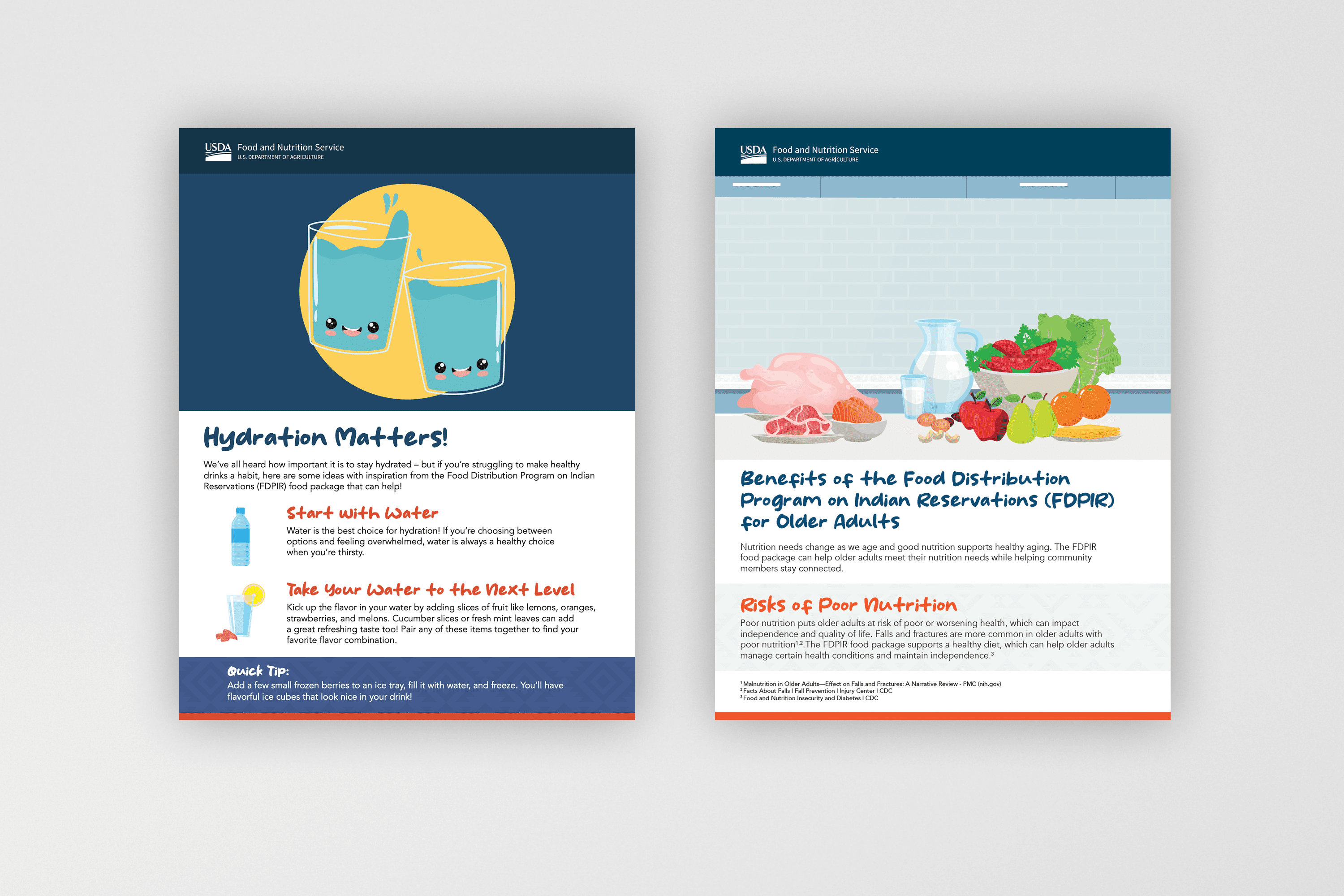
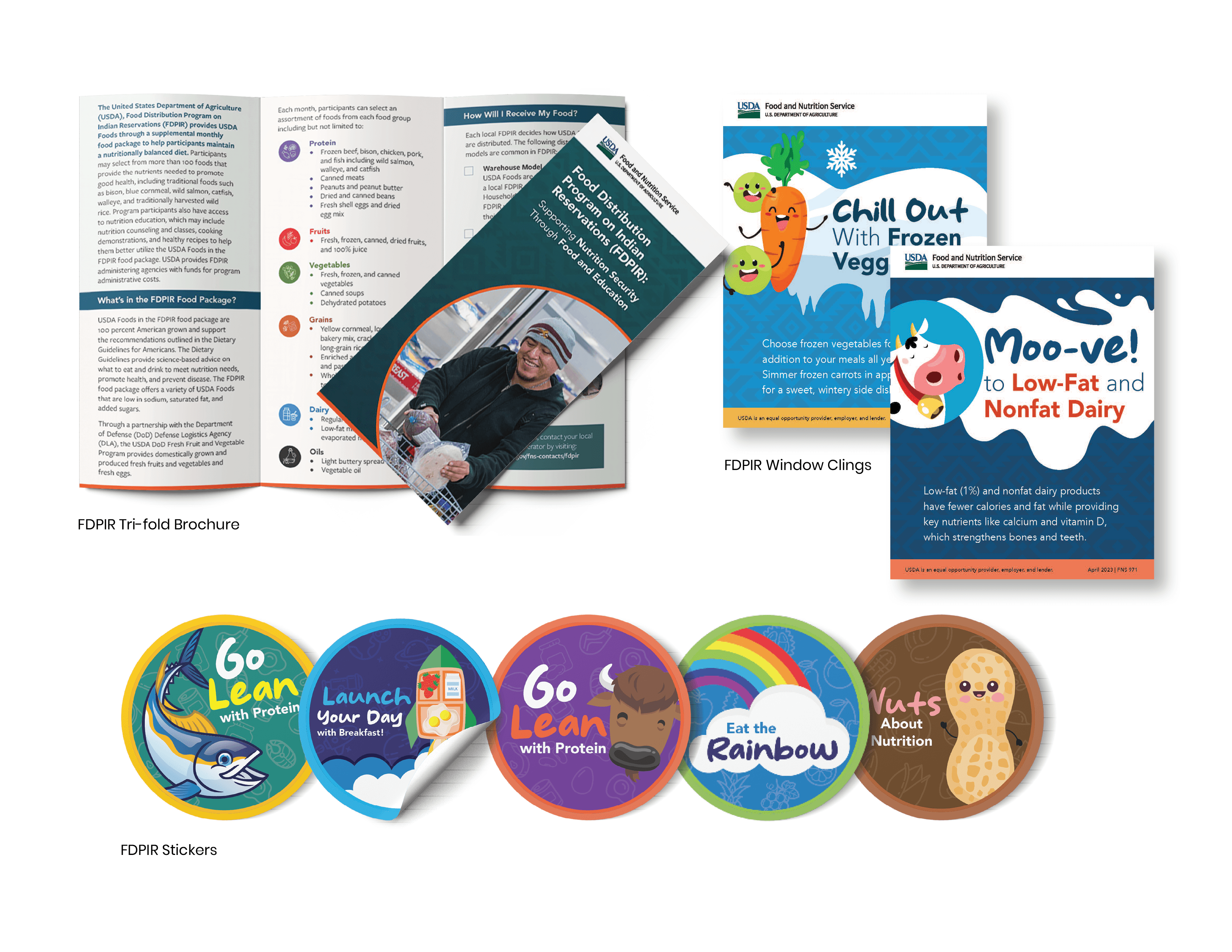
This project mattered because the audience mattered. Nearly 650,000 people rely on FDPIR as a primary source of food — in communities where one in four households experiences food insecurity. The creative had to serve them, not just inform them. That meant listening before designing, respecting the context, and building something that local teams were proud to hand out. Design as service. That's the work.
THE RESULTS:
• Full suite of outreach materials delivered across print and digital
• Two complementary creative systems (illustrative + photographic) for different audience needs
• Materials deployed across tribal organizations nationwide
• Gold Hermes Award 2024: USDA FDPIR Photoshoot and Collateral
• Platinum MarCom Award 2023: USDA Food Distribution Program on Indian Reservations
Creative Approach:
1. Discovery and Concept Development. We began by deeply exploring FDPIR’s mission, audiences, and existing materials. Through stakeholder discussions and cultural research, we identified key goals: making healthy food options clear and attractive, supporting nutrition education, and providing local staff with tools that felt trustworthy and easy to use.
I guided our team in developing two primary creative directions:
A fun, cartoon-inspired approach with bright colors and character illustrations to appeal to families and children.
A rich, photography-based style with bold color blocks and playful typography to highlight actual food options and maintain authenticity.
2. Illustrative Design System. For the cartoon-style materials, we created a playful, approachable look featuring familiar food and household items brought to life with personality. Animated fruits, vegetables, and kitchen staples helped break down barriers and make nutrition education more accessible and inviting.
3. Photography-Based Creative. For other pieces, our design approach emphasized high-quality imagery, clear messaging, and colorful layouts to showcase the range and quality of foods offered through the program. While I did not participate in managing the photoshoot itself, I led our design team in applying the resulting photography effectively and cohesively across all materials.
4. Production of Outreach Materials. We designed and delivered a full suite of outreach tools, including:
Trifold brochures
Posters
Factsheets
Shelf talker signage
Magnets
Stickers
Event and program signage
Each piece was carefully designed to be consistent, clear, culturally relevant, and adaptable for local program teams.
Results:
✅ Delivered a large, cohesive suite of outreach materials supporting nutrition education across reservations.
✅ Developed two complementary creative styles (illustrative and photography-based) to meet diverse audience needs.
✅ Created tools that were fun, bright, and inviting, helping local FDPIR staff communicate healthy choices more effectively.
✅ Supported USDA’s mission of delivering nutritious food options in a respectful, culturally aware manner.